Uncategorised - Aston Mead Land and Planning | Land with development potential across Surrey

Uncategorised

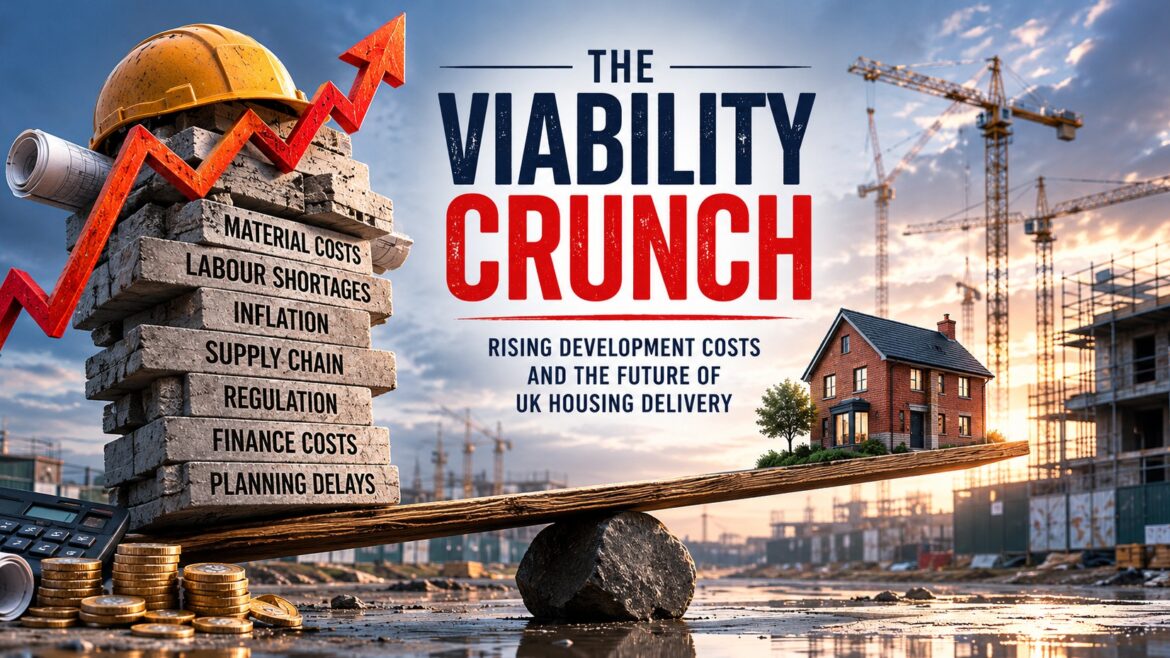
The Viability Crunch: Rising Development Costs and the Future of UK Housing Delivery

1024 562 Aston Mead Land and Planning | Land with development potential across Surrey

The residential development sector is facing mounting pressure from every direction. While the ambition behind many recent policies is understandable — improving safety, sustainability and environmental outcomes — the cumulative effect is creating a growing viability challenge across England and Wales.

For developers, investors and housing providers alike, the numbers are becoming increasingly difficult to ignore.

Recent industry research highlights that additional regulatory, taxation and policy costs can now add as much as £76,000 per new home on average — rising to almost £98,000 for high-rise developments.

At a time when the Government is targeting ambitious housing delivery figures, these escalating costs are contributing to a slowdown in planning applications, reduced delivery rates and increasing pressure on project viability.

Breaking Down the Rising Costs

The increase in development costs is being driven by a combination of inflationary pressures and new policy requirements.

Key contributors include:

  1. Material and labour inflation — approximately £37,000 per home
  2. Future Homes Standard requirements — around £10,200
  3. Building Regulations updates — approximately £7,770
  4. Biodiversity Net Gain obligations
  5. Nutrient neutrality mitigation costs
  6. Building Safety Levy contributions
  7. Section 106 inflation
  8. Landfill Tax increases
  9. Additional fire safety measures, including second staircase requirements

For high-rise developments, second staircase legislation alone is adding an estimated £22,000 per flat on average, disproportionately affecting urban schemes in London and major cities.

Collectively, these costs are now estimated to account for around 20% of the average market value of a new home.

The Impact on Housing Delivery

The consequences are already visible across the market. Housing completions have reportedly fallen from around 250,000 homes per year to approximately 200,000 — representing a 20% decline in delivery levels.

At the same time, residential planning applications are continuing to fall as developers reassess viability, funding structures and delivery risk.

While many of the individual policies are well intentioned, the challenge lies in the combined impact. Developers are increasingly being asked to absorb significant additional costs while operating in a market already affected by:

  1. Higher interest rates
  2. Build cost inflation
  3. Labour shortages
  4. Slower sales rates
  5. Reduced investor confidence

For many schemes, especially in marginal locations, viability is becoming increasingly difficult to achieve.

Why This Matters

Housing delivery relies heavily on confidence and certainty.

If development becomes financially unworkable, the pipeline of new homes slows — affecting not only developers, but also local economies, first-time buyers, renters and the wider supply chain.

The private sector remains critical to achieving the UK’s housing ambitions, but sustainable delivery requires a balanced policy environment that considers cumulative impact, not just individual initiatives in isolation.

Without intervention, the industry risks seeing:

  1. Fewer planning submissions
  2. Delayed starts on site
  3. Reduced affordable housing delivery
  4. Lower overall housing supply

Creating the Right Conditions for Growth

There is broad support across the industry for safer buildings, greener homes and improved environmental standards. However, achieving these goals alongside ambitious housing targets requires policymakers to fully recognise the commercial realities facing the sector.

A more joined-up approach to regulation, taxation and planning policy will be essential if Government and industry are to work together effectively to increase housing delivery.

The challenge now is not simply setting targets — it is creating the economic conditions that make delivering those homes viable.

Why Small Housing Sites Must Be Priced Correctly to Sell in Today’s Market

950 633 Aston Mead Land and Planning | Land with development potential across Surrey

Small housing sites have long been the engine room of SME development—flexible, deliverable, and relatively low risk.

That model has changed.

In today’s market, most small sites now require a full ‘planning ticket’ before they are even considered viable by developers. And even then, deals are far from guaranteed.

What’s Changed?
We’re seeing a consistent pattern across the South of England and beyond: sites that would have traded easily 2–3 years ago are now stalling.

The reasons are well understood:

  • Interest rates remain elevated, impacting developer finance
  • Build costs have softened slightly, but not enough to restore margins
  • Sales rates are slower, with increased uncertainty on exit values
  • Affordable housing values are under pressure
  • Development costs continue to rise (BNG, Nutrient Neutrality, CIL, S106, SPA)
  • Planning outcomes remain inconsistent and difficult to de-risk

Individually, none of these are fatal. Combined, they are stopping schemes from stacking.

The Shift in Risk

The key change is where the risk now sits.
Developers—particularly SMEs—are no longer willing to absorb significant planning and viability risk upfront. The result:

  • Unconsented sites are often overlooked entirely
  • Bids are more cautious, with greater emphasis on margin protection
  • Fewer buyers are competing for each opportunity

At the same time, many landowners are still anchored to historic pricing expectations.

That gap is where deals are falling apart.

Why Pricing Matters More Than Ever

In this market, pricing is the primary lever to unlock a sale.

A site priced on outdated assumptions—when:

  • finance was cheaper
  • planning was more predictable
  • and margins were easier to achieve

…will simply not transact today.

By contrast, a site that reflects:

  • current build and finance costs
  • realistic sales values
  • and the true level of planning risk

will generate interest and competitive tension.

The reality is straightforward:

the market hasn’t disappeared—pricing has just not caught up with it.

Planning Isn’t a Silver Bullet

Securing planning consent was once the key milestone to unlock value.

Now, even consented sites can struggle if:

  • obligations are too high
  • density is constrained
  • or margins are too tight

Planning reduces risk—but it doesn’t eliminate viability challenges.

What This Means for Landowners

For landowners considering a sale, the approach needs to evolve:

  • Be realistic on value – the market has reset
  • Consider planning strategy carefully – consent may be necessary, but it comes with cost and risk
  • Take advice early – positioning and timing are critical

Most importantly, understand that today’s buyers are disciplined. They are not chasing sites—they are selecting them.

The Bigger Picture

Small sites should be the easiest homes to deliver.

Instead, they are increasingly some of the hardest to bring forward.

If SMEs are to play a meaningful role in housing delivery, the system needs to:

  • reduce upfront risk
  • provide greater planning certainty
  • and rebalance the burden of contributions

Until then, correct pricing remains the difference between a site that sells and one that sits still.

Thinking of Selling a Small Site?

If you own land with residential potential—whether consented or not—we can provide clear, evidence-based advice on:

  • Current market value
  • Likely developer appetite
  • Planning and disposal strategy

Contact Aston Mead today for a confidential discussion.

Unlock the True Value of Your Land with Aston Mead

1024 535 Aston Mead Land and Planning | Land with development potential across Surrey

If you own land, a large garden, or a property you believe might have development potential, Aston Mead helps landowners understand what their land is really worth — and how to achieve the best possible outcome.

We are a specialist land agency and planning consultancy working across the South East and South West of England, with over 25 years of experience helping landowners sell land for development, promote strategic sites, and maximise value through the planning process.

Many landowners come to us unsure whether their land is suitable for development, or unaware of its full potential. Our role is to provide clear, honest advice and guide you through every stage — from initial appraisal to final sale.

Specialist Advice for Landowners Considering Selling Land

At Aston Mead, we focus exclusively on land and development opportunities. Unlike traditional estate agents, we work with land every day — from small garden plots and infill sites to large strategic landholdings. This specialism allows us to identify opportunities others may miss.

We offer free, no-obligation land appraisals to landowners who want to explore their options. Whether your land already has planning permission, sits within a settlement boundary, or may have long-term development potential, we can advise you on the best strategy to maximise its value.

Our team assesses:
Development potential and planning prospects
Market demand from suitable developers
Likely values with and without planning permission
Options such as outright sale, promotion agreements, or options
We then explain your choices clearly, so you can make informed decisions with confidence.

Access to Over 1,000 Active Developers

One of the biggest advantages of working with Aston Mead is our extensive developer network. We work with more than 1,000 housebuilders and developers, ranging from local builders to national PLCs.

This means when we market your land, it is presented directly to the developers most likely to be interested — creating competition and helping achieve the strongest possible price. We manage all negotiations on your behalf, ensuring your interests are protected throughout the process.

Because developers trust our assessments and site selection, land marketed through Aston Mead attracts serious, qualified interest.

Planning Expertise That Maximises Land Value

Planning can be complex, time-consuming, and uncertain — but handled correctly, it can significantly increase land value. Aston Mead provides strategic planning insight to help landowners unlock this uplift.

For land without planning permission, we can advise on:
Promotion agreements
Strategic land opportunities
Planning risk versus reward
Timescales and costs involved
We work closely with planning consultants and technical teams to help position land favourably, improving the chances of success while keeping landowners fully informed at every stage.

A Personal, Professional Approach

Many of our clients are private landowners who have never sold land before. We understand that selling land can feel daunting, especially when large sums and long timescales are involved.

Our approach is personal, transparent, and relationship-driven. We take time to understand your circumstances, objectives, and priorities — whether that means achieving maximum value, minimising risk, or planning for the future.

From first conversation to completion, we handle the process for you, keeping communication clear and straightforward.

Regional Expertise You Can Trust

With offices in Surrey and Devon, Aston Mead is deeply embedded in the South East and South West property markets. Our local knowledge, combined with national developer reach, allows us to position land effectively and realistically.

Thinking About Selling Land?

If you own land, a large garden, or a property with potential, a conversation with Aston Mead could make a significant difference.

Contact us today for a free, confidential land appraisal — and discover what your land could really be worth.

Planning and Infrastructure Act 2025: What Landowners Need to Know

600 399 Aston Mead Land and Planning | Land with development potential across Surrey

The Planning and Infrastructure Act 2025 introduces major changes to how development and infrastructure projects are planned and approved across England. While much of the discussion has focused on developers and national infrastructure, the reforms are also highly relevant for landowners — particularly those with land that may be suitable for future housing or strategic development.

This guide explains what the changes mean in practical terms and how landowners can position themselves to benefit.

Why This Matters for Landowners

The government has set a strong direction of travel: accelerate housing delivery and unlock strategic development sites. The new legislation is designed to remove delays, simplify processes, and support large-scale growth — including new settlements and urban extensions.

For landowners, this creates increased opportunity — but also makes timing, planning strategy, and site promotion more important than ever.

Faster Routes for Major Development Projects

The Act introduces reforms aimed at speeding up the approval of major infrastructure and large-scale development schemes. While not every landowner site will fall into these categories, the knock-on effects are important:

  • Quicker infrastructure delivery can unlock surrounding land
  • Transport and utilities investment often increases land promotion potential
  • Strategic growth areas are likely to receive stronger policy support

Land close to transport corridors, proposed infrastructure routes, or growth zones may become more attractive for development promotion.

New Approach to Environmental Requirements

A key change is the introduction of Environmental Delivery Plans and a Nature Restoration Fund. These are intended to allow development to move forward while environmental improvements are delivered at a broader, strategic scale.

In simple terms, this could mean:

  • Less reliance on site-by-site environmental mitigation alone
  • More use of pooled or strategic environmental solutions
  • Reduced risk of sites being stalled due to complex mitigation requirements

For landowners, this may help bring forward sites that previously faced environmental constraints — although detailed guidance is still emerging.

Stronger Push for Large-Scale Housing Sites

Government policy is increasingly focused on:

  • New settlements and large urban extensions
  • Growth near transport hubs
  • Strategic housing allocations
  • Delivery of affordable homes

Smaller sites remain important, but larger, well-located landholdings are likely to receive greater attention in plan-making and promotion exercises.

Landowners with sizeable parcels — or land that could be assembled into larger schemes — may see increased developer and promoter interest.

Planning Authorities to Focus on Major Schemes

Changes to planning committee structures and planning fee rules are intended to help councils concentrate resources on significant development proposals.

Councils will also gain more control over planning fees for major applications, which may lead to:

  • Better resourced planning departments
  • Faster handling of strategic applications
  • Greater focus on deliverable housing sites

For promoted land, this could improve decision timelines — though local authority performance will still vary.

Reduced Scope for Legal Delays on Major Infrastructure

The Act tightens the rules around legal challenges for certain nationally significant infrastructure projects, limiting repeated judicial review attempts in cases deemed without merit.

While this mainly affects large infrastructure schemes, it may indirectly benefit nearby development land by reducing long-running delays to enabling infrastructure.

What Landowners Should Do Now

With the planning system evolving, landowners should consider:

Reviewing land potential

  • Is your land near transport, settlements, or growth areas?
  • Could infrastructure investment improve its prospects?

Understanding promotion options

  • Strategic land promotion agreements
  • Option agreements with developers
  • Joint promotion approaches

Engaging early

  • Local Plans and call-for-sites exercises remain critical
  • Early representation increases the chance of allocation

Taking professional planning advice

  • Policy is shifting quickly
  • Site strategy now can significantly affect future land value

How Aston Mead Land & Planning Supports Landowners

At Aston Mead Land & Planning, we specialise in securing land on behalf of clients to promote land through the planning system and securing development value for landowners. We monitor planning reform closely and adjust promotion strategies to reflect new policy and legislative changes.

If you would like an initial view on your land’s development potential under the new planning framework, we can provide a confidential, no-obligation assessment.

Emerging Land trends for 2026

1024 683 Aston Mead Land and Planning | Land with development potential across Surrey

The UK Development & Residential Land Market: Outlook Through 2026

As the UK moves into 2026, the development and residential land market is settling into a period best described as cautiously optimistic, albeit subdued. Recent industry reports and market indicators suggest that while the market is no longer in sharp correction, it is far from a full recovery. Instead, it is holding steady, with performance increasingly dependent on location, planning status, and site quality.

A Market Holding Its Ground

Residential development land values across the UK have been broadly flat to slightly down over the past year. Data from sources such as Knight Frank’s Development Land Index shows modest annual declines, particularly during 2025, but crucially there is little evidence of widespread distress. Rather than a collapsing market, the prevailing mood is one of consolidation.

Developer demand remains selective. Prime, consented sites in strong locations continue to attract competitive interest, while peripheral or higher-risk land is seeing significantly less activity. The result is a market defined by clear differentiation: good sites still trade, while weaker ones struggle to gain traction.

How Land Values Are Shifting

Value trends differ noticeably between greenfield and brownfield land. Greenfield sites, particularly those on the edge of towns or forming part of larger strategic allocations, have generally shown greater resilience. Limited supply in many regions has helped underpin values, and forecasts suggest relative stability into 2026, assuming planning outcomes and housing demand remain supportive.

Urban brownfield land has faced more sustained pressure. These sites often carry higher build costs, greater technical complexity, and longer planning timelines, all of which have weighed on viability. As a result, values in this segment have softened more noticeably, especially in markets with weaker end-buyer demand.

Across both categories, planning status is a decisive factor. Sites with consent already in place, or with a strong likelihood of approval, are markedly more attractive to developers and far less exposed to wider market softness.

The Forces Shaping the Market

Several structural drivers will continue to influence land values and activity through 2026. Planning remains a central issue. While there are signs of incremental improvement in the system, delays and capacity constraints continue to affect delivery, particularly for SME developers who lack the scale to absorb prolonged uncertainty.

Finance and overall scheme viability also remain key constraints. Higher borrowing costs, combined with elevated build costs and increasing regulatory requirements—such as tighter energy efficiency standards—have made developers more cautious when committing capital to new land purchases.

Underlying housing demand is another critical piece of the puzzle. Early indicators for 2026 point to muted buyer activity, especially among first-time buyers. This softness at the sales end naturally tempers developers’ appetite for acquiring new sites, reinforcing the market’s selective nature.

What to Expect in 2026

Looking ahead, market activity is expected to pick up modestly in early 2026, with more sites coming forward as landowners anticipate renewed interest. Developers, however, are likely to remain disciplined, focusing on well-connected, strategic land with planning certainty rather than speculative or high-risk opportunities.

In terms of values, forecasts point towards flat to modest upward movement in prime locations. Significant growth appears unlikely without stronger demand-side support or further policy stimulus aimed at housing delivery. Regional performance will also vary. High-growth regional cities such as Manchester, Birmingham, and Bristol, along with well-located urban edge sites, are expected to outperform. By contrast, London and higher-risk urban redevelopment land may continue to face pressure due to weaker transactional volumes.

Practical Implications for Market Participants

For landowners, the message is clear: sites that are consented or well located near infrastructure are best positioned to attract interest. More marginal or poorly connected land may require realistic pricing and a longer-term view.

Developers are likely to find opportunities in strategic acquisitions where planning risk is low and delivery is clear. Smaller, complex, or high-risk sites, however, may remain challenging given financing costs and ongoing uncertainty around build viability.

For investors, long-term fundamentals remain supportive. The UK’s structural housing shortage and continued policy focus on increasing supply provide a solid underpin. That said, short-term sentiment is likely to stay cautious until housing demand shows clearer signs of recovery.

In Summary

The UK residential development land market heading into 2026 looks steady rather than strong. Sentiment is cautiously optimistic, land values are largely flat with modest upside in prime areas, and demand is selective, favouring consented and strategic sites. Financing costs, planning delays, and viability pressures remain the main constraints.

The bottom line is that this is a market of targeted opportunities rather than broad-based momentum. Success through 2026 will depend on careful site selection, planning progress, and a gradual rebuilding of developer and buyer confidence.

The Struggles of SME Property Developers

800 534 Aston Mead Land and Planning | Land with development potential across Surrey

Small and medium-sized property developers (SMEs) play a crucial role in tackling the UK’s housing shortage. They’re the ones creating high-quality, locally focused projects that large national builders often ignore. But despite their importance, many SME developers are finding it harder than ever to survive in today’s complicated and expensive planning and development system.

According to the latest State of Play 2025/26 report by the Home Builders Federation (HBF) and Close Brothers Property Finance, the situation is getting tougher. The biggest problem? The planning system. Endless delays, red tape, and inconsistent decisions mean projects can be stuck in limbo for months—or even years—before a single brick is laid.

Rising Costs and Uncertain Viability

Every part of the process is getting more expensive. Land prices are often too unrealistic, materials cost more, and skilled workers are increasingly hard to find. Wage inflation and supply issues—made worse by global disruption—have added more pressure to already stretched budgets. For smaller developers working on tighter margins, this can make or break a project.

Regulation Overload

New regulations designed to improve safety and sustainability are well-intentioned, but they often hit SMEs hardest. Rules like the Building Safety Levy and Biodiversity Net Gain all come with extra costs and complex compliance requirements. Large developers can afford whole teams to manage this red tape—but smaller firms simply can’t, leaving them at a disadvantage.

Infrastructure Delays

Even when planning permission is finally approved, another hurdle awaits: connecting new homes to essential infrastructure. Wastewater and power connections are often delayed, and utility adoption processes can drag on endlessly. These bottlenecks can halt projects, frustrate buyers, and damage SME credibility.

Confidence and the Future

It’s no surprise that confidence among small developers is slipping. The HBF reports that 97% of SME builders believe current conditions are holding back their growth. Yet, the potential is huge—if the barriers were lifted, SMEs estimate they could deliver an extra 100,000 homes each year, boosting output by more than 50%.

What Needs to Change

To unlock this potential, the industry needs urgent reform. Planning processes must be simplified, access to finance improved, and infrastructure coordination made faster and clearer. The rules and red tape that strangle smaller builders need to be cut back so they can focus on what they do best—building quality homes.

SMEs are ready to build. The real question is: will the system let them?

Planning for Growth: How Reforms Could Unlock Land Opportunities

646 400 Aston Mead Land and Planning | Land with development potential across Surrey

As the government looks to address the UK’s chronic housing shortage, planning reforms are once again at the forefront of the debate. While the details are still being refined, the direction is clear — greater flexibility, more accountability, and a renewed focus on sustainability. For landowners and developers, this represents both a challenge and a significant opportunity.

A Balanced Approach to Land and Housing Supply

The proposed framework aims to strike a balance between protecting the character of local areas and ensuring enough land is available for much-needed homes. Local authorities will be expected to maintain a rolling five-year supply of deliverable sites, making it easier to bring forward sustainable developments.

Encouraging Sustainable Growth

Future planning policy will promote urban regeneration and make better use of underutilised plots, especially brownfield sites. This aligns with the government’s ambition to build more homes in existing communities — reducing pressure on the countryside while revitalising towns and cities.

Supporting Affordability and Choice

A major focus of the reforms is increasing housing diversity and affordability. By ensuring a steady and predictable supply of land, planners hope to stabilise the market and encourage the delivery of both private and affordable homes. This is expected to support first-time buyers and local families struggling to find suitable housing.

Unlocking the Potential of Land

For landowners, the message is clear: sites that align with sustainability and local housing needs will be in strong demand. Whether you hold brownfield land, edge-of-settlement plots, or larger strategic sites, now is the time to review your options.

At Aston Mead Land & Planning, we work closely with landowners, developers, and local authorities to identify opportunities that align with emerging policy and market trends. Our expertise in navigating the planning system ensures your land achieves its full potential — whether through promotion, sale, or development partnerships.

If you own land and would like an up-to-date appraisal of its potential under the latest planning framework, contact our team today.

What is Self Build?

612 408 Aston Mead Land and Planning | Land with development potential across Surrey

“Self-build” typically refers to the process where individuals take on the role of building their own home rather than buying a pre-built house from a developer. It can involve a wide range of approaches — from hands-on DIY building to hiring contractors and managing the project like a developer would. It’s popular in places like the UK, parts of Europe, the US, and Australia.

Here’s a breakdown of what self-build usually involves:

What is Self-Build?

Self-build means you take responsibility for the design and construction of your own home. That doesn’t mean you must physically build it yourself — many self-builders hire professionals for some or all of the work — but you control the decisions and direction.

Types of Self-Build

  1. DIY Build: You do most or all of the work yourself.
  2. Self-Managed Build: You hire tradespeople and manage the project.
  3. Custom Build (Developer-Assisted): You work with a company that handles construction, but you have input into the design and materials.
  4. Kit Homes / Prefab: You buy a pre-designed home kit that is assembled on-site.

Stages of a Self-Build Project

  1. Planning and Budgeting
    • Secure financing (self-build mortgages exist in some countries).
    • Set a realistic budget (land + build + contingency).
  2. Finding Land
    • Often the hardest part. Consider planning permission and access to services.
  3. Designing the House
    • Use an architect, designer, or purchase a plan.
    • Apply for planning permission if required.
  4. Construction
    • Site prep, foundations, structure, roofing, first fix, second fix, finishing.
  5. Inspections & Certification
    • Building control and legal compliance.
  6. Move-in and Post-Build Work
    • Landscaping, snagging, possible future extensions.

Costs and Financing

  • Land can be a significant cost.
  • Build costs range from £1,500 to £3,000+ per m² in the UK depending on the design and finish.
  • Self-build mortgages release funds in stages as the build progresses.

Pros of Self-Build

  • You get a custom home tailored to your needs.
  • Often better quality and energy efficiency.
  • Potential cost savings vs buying from a developer.
  • Deep personal satisfaction.

Cons of Self-Build

  • Time-consuming and often stressful.
  • Budget overruns are common.
  • Complex logistics, planning, and regulations.
  • Finding suitable land can be difficult.

Is Self-Build Right for You?

It suits people who:

  • Want a unique home.
  • Are detail-oriented and comfortable managing complex projects.
  • Are willing to deal with red tape

If you would like help selling or sourcing land suitable for self-build please contact one of the team on 01932 950500 or mail@astonmead.land.

What is Grey Belt.

1024 684 Aston Mead Land and Planning | Land with development potential across Surrey

The Government’s recent proposals to amend the National Planning Policy Framework (NPPF) introduced a relatively new concept of Grey Belt. 

The Grey Belt does not refer to the land around an area, like the Green Belt, however, refers to poor-quality and neglected spaces within the Green Belt. These sites were difficult to develop previously as they were situated in the Green Belt. The government’s plan is to allow the development of these previously used and/or unsightly sites to free up land for the construction of new homes with 5 golden values applying.

1. Brownfield development must be prioritised ahead of Green Belt.
2. Grey Belt development will come next.
3. Green Belt development must include at least 50% affordable homes.
4. New public services and infrastructure must be introduced when building on the Green Belt.
5. Green Belt development must be ‘accompanied by a plan to improve existing green spaces and create new ones accessible to local people.’

Land however that is not included is:

Habitat sites | Sites of Specific Scientific Interest | Areas of Outstanding Natural Beauty | National Parks | Areas of risk of flooding i.e Flood Zones 2 & 3

If you feel your land could qualify, please contact one of our knowledgeable team for an initial assessment on 01932 950500 or mail@astonmead.land.  

Strategic Land: What exactly is it?

1024 512 Aston Mead Land and Planning | Land with development potential across Surrey

Strategic land plays a crucial role in shaping the future of communities, economies, and infrastructure. It refers to land that has potential for future development, often situated in areas where expansion is anticipated due to population growth, economic trends, or infrastructure improvements. Identifying, acquiring, and managing strategic land effectively can provide long-term value for investors, developers, and policymakers.

What Is Strategic Land?

Strategic land is typically undeveloped or underutilized land that has potential for future planning permission and development. Unlike land that is immediately available for construction, strategic land requires a forward-thinking approach, involving research, planning, and engagement with local authorities and stakeholders. Often strategic land is identified during the ‘Call for Sites’ whereby local authorities ask landowners or their representatives to submit land they feel could be suitable for development for consideration in the Local Plan.

Examples of strategic land include:

• Greenfield sites on the outskirts of urban areas.

• Land near planned infrastructure projects (e.g., highways, railways).

• Brownfield sites with redevelopment potential.

• Agricultural land in areas expected to receive urban expansion.

Why Is Strategic Land Important?

1.Meeting Housing and Infrastructure Demands

With growing populations and evolving economic hubs, there is a continuous demand for housing, commercial spaces, and infrastructure. Strategic land helps accommodate this growth in a planned and sustainable manner.

2. Long-Term Investment Opportunity

Acquiring strategic land at an early stage can yield significant returns as land values rise following planning approvals and urban expansion. Investors and developers who anticipate future growth trends can benefit from appreciation and strategic sales.

3. Supporting Economic Growth

Developing strategic land stimulates local economies by creating jobs, attracting businesses, and enhancing public services. Well-planned developments contribute to regional economic prosperity.

4. Sustainable Development and Smart Planning

Strategic land acquisition enables responsible urban expansion by ensuring that growth aligns with infrastructure availability, environmental considerations, and community needs.

Challenges in Strategic Land Development

1.Planning Permission and Regulatory Hurdles

Obtaining planning approvals can be a lengthy and complex process, requiring compliance with local development plans, zoning regulations, and environmental policies.

2. Land Value Uncertainty

While strategic land can appreciate significantly, market conditions, policy changes, and economic downturns can impact land values and development feasibility.

3. Community and Environmental Concerns

Local communities and environmental groups may oppose development due to concerns over green space loss, increased traffic, and ecological impact. Engaging with stakeholders is crucial for successful land promotion.

How to Identify and Develop Strategic Land

1.Research Market Trends and Policies

Understanding government housing targets, infrastructure plans, and economic growth areas can help identify high-potential locations.

2. Engage with Planning Authorities and Stakeholders

Early discussions with local councils, planning officers, and community groups can improve the chances of securing approvals.

3. Conduct Site Assessments and Feasibility Studies

Factors such as access to transport, environmental impact, and infrastructure capacity should be evaluated before acquiring land.

4. Partner with Experts

Land promoters, planning consultants, Land agents (we know a good one) and legal professionals can provide valuable insights to navigate the complexities of land development.

Conclusion

Strategic land represents a powerful opportunity for long-term growth and development. By identifying and investing in land with future potential, stakeholders can contribute to sustainable urban expansion while securing financial gains. However, success in strategic land development requires careful planning, regulatory navigation, and proactive engagement with communities and authorities.

If you believe your land has potential for development in the next 5 to 15 years, we would be happy to provide a free initial appraisal to assess its likelihood.

We look forward to hearing from you.