mattd - Aston Mead Land and Planning | Land with development potential across Surrey - Page 4
Posts By :

mattd

Adam Hesse

Aston Mead welcomes move to ban councils from gambling on the property market

370 230 Aston Mead Land and Planning | Land with development potential across Surrey

Adam HesseLeading land agents Aston Mead have welcomed proposals to ban local authorities from making risky investments in commercial property and say councils should spend the money on affordable housing instead.

The move follows revelations that since 2016 local authorities have borrowed £6.6bn to buy shopping centres and office blocks, to replace revenue lost by government cuts – 14 times more than in the previous three years. Over a third of that spend was made outside their boroughs. Last month it was reported that the Treasury now intends to “severely restrict councils’ ability to borrow for the sorts of out-of-area investments which are for yield rather than for policy reasons”.

Aston Mead Land & Planning Director Adam Hesse said: “We’ve been warning councils about their wild property gambling spree in a series of press releases, articles and interviews for the past two years.

“For instance, we know of one local authority which bought a shopping centre for an eye-watering £40m just weeks before the lockdown came into effect. Not surprisingly, more than 90% of its stores are now shut. And there’s another which paid £6.2m for a hotel that the tenant has said will go bust without a rent cut of up to 80%.

“Let’s face it – the authorities concerned are hardly experts in property speculation. And yet they are risking vast amounts of taxpayer-funded debt on commercial premises, often outside their districts, and about which they know next to nothing. These councils are massively over-exposed and putting public services in jeopardy. I’d be astonished if they got half of their money back or half of their rents paid!”

The British Property Federation says that only one third of retail rents and two thirds of office rents were paid on time in March of this year. It expects those figures to halve again this month. Meanwhile, Property groups are finding it difficult to sell retail parks even at rock bottom prices, and analysts forecast lower office rents for years to come, as more people chose to work from home.

However, it has since been suggested that the proposed ban may contain a major loophole because whilst the plans will force councils to hire a qualified independent accountant, it appears that they may not have to follow the advice provided.

Adam Hesse said: “This is absurd. For this ban to work, it should be mandatory to follow the guidance given. No exceptions, no exemptions, no excuses.

“In fact, we would propose that councils go even further. Local authorities have been funding their property speculation by borrowing from the Public Works Loan Board at incredibly low rates.

“No one begrudges councils being able to access money cheaply, of course. But we think that this cash should be used to build affordable homes on council-owned land instead.

“Local authorities are some of the largest landowners in the UK. As one of the South East’s most proactive land agents sourcing sites for our developer clients, we are amazed at how much council development land there is in our town and village centres, and yet they’re doing nothing with it!

“We suggest that councils could continue to invest in property by selecting their own sites on which to build, provide the planning permission required, and decide how many properties should be constructed – all in their own local regions – the circumstances and needs of which they intimately know and understand.

“The homes would enhance the value of the land, as well as provide a regular rental income for the council. The level of risk the authority would be exposed to would immediately diminish, and it would mean that we could start to construct the affordable homes that people in this country so desperately require.

“Perhaps the Government should issue Compulsory Development Orders on local authority land where there is an acute shortage of affordable homes to offer those on the waiting lists.

“It’s estimated that this country needs to build 100,000 genuinely affordable homes over the next five years – many of them for key workers. Our proposal would be the perfect way to thank them for their sterling efforts through the Coronavirus crisis.”


Richard Watkins

It’s “business as usual” during lockdown, say land agents

370 230 Aston Mead Land and Planning | Land with development potential across Surrey

Richard WatkinsLeading land agents Aston Mead say that their sector is continuing to operate in a way which has been relatively untouched by the coronavirus pandemic.
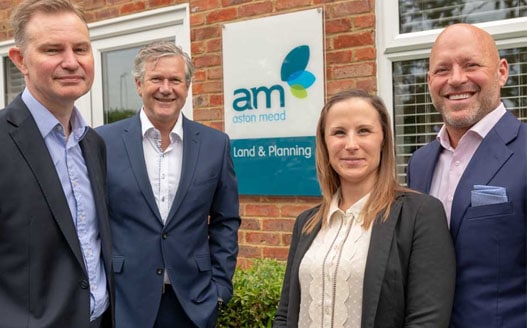
Unlike estate agency, which has reportedly seen a drop of around 90% in the level of property sales for the time of year, Director Richard Watkins says that land deals are taking place much as they were before the crisis.

He explains: “We certainly haven’t stopped working during lockdown. Deals are still being agreed and exchanged and clients are still calling us for development opportunities. We’re hearing from developers who still want to buy sites and see no reason not to proceed. So far, it has been as close to business as usual as we could have hoped for.

“We have a number of estate agency partners who pass us land opportunities – and very few of them have had deals fall through on back of the pandemic. All of them are in regular touch with their sellers and buyers, and they report that the majority of them want to continue to sell and buy, just as soon as the lockdown allows.”

Richard Watkins says that whilst some developers have been a little wary about buying sites with planning permission in place because they are less certain about the immediate future, those buying sites on which they are hoping to get planning are still going ahead and are hungry for more.

He says: “Recently, we’ve had three deals involving SME developers – in Haywards Heath, Maidenhead and Oxted – all of which were agreed at the end of last year or the beginning of this one. They have all exchanged, without fail, in the last couple of weeks. If people were expecting such developers to sit on their hands and do nothing during lockdown, that’s certainly not the case!

“Their thinking is that it’s going to take 6 to 12 months to get planning permission and another 12 months to build – so they are at least 18 months to 2 years away from having something on the market to sell. That’s a long time – and they are expecting normal life to have returned by then.

“In fact, we’ve only lost one sale due to lack of funding. It was an unconditional purchase of a site in Berkshire, because the bank pulled the plug due to the higher than normal risk factor of that site. So it’s possible that there will be a drag on business for the next six months or so, as people get used to the new normal. But we see this as a more of a temporary blip, rather than a long curve down the spiral.”

Richard also says that he nature of the business they carry out and advances in technology have combined to leave them well placed to deal with the current crisis.

He explains: “Social distancing is easy for us because we tend to operate using online development software – certainly in the first stages of a land transaction. Some sellers are unlocking their site and leave prospective buyers to take a look around entirely by themselves. And we’re currently close to agreeing a deal which has so far been carried out entirely via Zoom; we’ve not met the landowner nor buyer face to face, and haven’t yet needed to visit the site at all!

“The truth is that before the virus struck, the UK was building 200,000 homes a year. The target was 300,000 – but even if we only return to the 200,000 figure in the future, we’ve still got to deliver those homes.

“For many investors, this situation will present itself as a very good buying opportunity. Some people will dither; some will sit on the side-lines. But we’re very good at adapting in this country.

“As a team we have adopted a positive attitude throughout – which has certainly helped – and have been careful not to talk ourselves into a worse market on the back of the often gloomy predictions out there. And as the rental market is showing a massive pent up demand from tenants, I’m convinced that the property market will find a way through this. Meanwhile, in land agency, we’ll keep working as we always have done.”

AM blog image

An update from Aston Mead Land & Planning

527 328 Aston Mead Land and Planning | Land with development potential across Surrey

We are experiencing what is unquestionably the most difficult time for British companies in a generation – not only in the property industry, but elsewhere as well – all trying to cope with the coronavirus outbreak.

We appreciate that times are hard for all of us at the moment. And with the UK currently under lockdown, it’s easy to believe that the country has closed for business completely.

But the truth is that clients are still speaking to us everyday, and we’re still doing deals.

As we still have demand from developers, we are offering free desk top appraisals of land. These can be carried out remotely, so travel restrictions and social distance requirements don’t prevent us from doing the work we need to do.

It’s also worth remembering that one day, all this will be over. Now might be a good time for people to evaluate their options – even if it’s just to discover whether they really are options at all!

So, if you’re currently sitting at home and would consider selling land in the future, please feel free to give us a call, or drop us an email. There’s no cost, no hard-sell, and no obligation to act. In fact, you’re welcome to contact us just to find out what your land is worth.

You might be pleasantly surprised.

Aston Mead – your land experts.
Telephone: 01932 950500
Email: mail@astonmead.land

Aston Mead Land

Aston Mead welcomes planning proposals “fit for the 21st Century”

370 230 Aston Mead Land and Planning | Land with development potential across Surrey

Richard WatkinsLeading land agents Aston Mead have welcomed Government proposals to launch a planning revolution, which promises to deliver 300,000 new homes a year.

The reform of the planning system was announced last week by Housing Secretary Robert Jenrick, to ensure it is “fit for the demands of the modern world.” Under the proposals, councils will be told to turbo-charge planning approvals, with Government intervention should they fail, and homeowners in detached houses being able to build upwards by two storeys without any extra consent at all.

Aston Mead Land & Planning Director Richard Watkins says: “As anyone who has seen our regular media announcements already knows, we’ve been calling for more relaxed planning regulations for years. In fact, the current system is the biggest barrier to getting more houses built. The new proposals would at long last make the country’s planning system fit for the 21st Century.”

The plans include a policy of putting brownfield sites first, allowing mayors and local councils to bring forward proposals to help get the most out of unused land in urban areas that is often going to waste, while protecting the green belt. A register of brownfield sites suitable for housing is due to be launched, which will map out unused land, and make sure that councils get the support they need to put it to best use. All local planning authorities will also be required to have up-to-date local plans in place by December 2023.

Richard Watkins adds: “There is also a call for proposals for building above railway stations, and an encouragement for councils to ensure that the redevelopment of high streets is housing-led – both of which are reforms we have explicitly suggested in recent months.

“The truth is that more planning freedoms are essential to get the country building again. The whole process needs to be speeded up and simplified, as well as being made more innovative and less bureaucratic, with more local people involved in the decisions which are being made.”

Richard Watkins believes that planning departments need to take a much more pragmatic, ‘can do’ approach. He explains: “Departments are often understaffed and in some cases involve talking to several different planners for a single application – and this has to stop if targets are going to be hit. Many developers feel it is them against us, but in fact we should be all working together to deliver much needed housing.

“Admittedly, whilst the Coronavirus outbreak has put many plans onto the back burner, it’s good to see Government policy heading in the right direction. Hopefully, when the current crisis is over, even if the amount of finance available is reduced, the same zest and drive for ambitious planning will win through.”

Aston Mead calls for radical shake up of housing and planning policies

400 250 Aston Mead Land and Planning | Land with development potential across Surrey

Leading land agents Aston Mead are calling for radical and creative thinking from Government departments, in a New Year ‘wish list’ to help the construction industry.

Land & Planning Director Adam Hesse says that the new Government should make use of its recent majority to launch initiatives which could make a material difference to the success of the sector nationwide.

He said: “After years of stalling and stagnation, there’s now a new Government in place, with the support of enough members in parliament to carry out most of its wishes. But rather than sitting on its laurels, this is the time to consider some radical new approaches. We’ve already heard the Prime Minister’s Chief Advisor Dominic Cummings say that he wants to shake up Whitehall; the same should happen to housing and planning policies.”

Hesse says that the continued existence of old problems is proof that previous attempts simply haven’t worked, and that the new Government now has a perfect New Year opportunity to consider how things can be done differently.

He explained: “For example, if you speak to anyone in the Land & New Homes sector, they will tell you the same thing: the main issue is planning. Everyone agrees that the current system is far too clunky and slow moving because local authority planning departments are underfunded and full of de-motivated staff. So, how about offering temporary posts to retired planning officers, who could be brought out of retirement to work on a flexitime basis? That would immediately help reduce the backlog of applications, as well as ensuring that people with valuable backgrounds and experience were on hand to help.

“Another planning issue concerns pre-application meetings. The planning officers encourage developers to take this stance, and yet very little helpful information seems to be given at such an early stage – with officers seemingly terrified to undermine themselves or colleagues by committing to anything meaningful. As well as adding to the costs, this means that planning is delayed by at least 2 months, as that seems to be the lead-in time before the planners will agree to meet with the developers to discuss a specific case.

“Similarly, planners currently require a whole myriad of reports to accompany any application including topographical, environmental and highway analysis. These are very expensive to acquire, can be time consuming – for example bat surveys take at least six months to carry out – and after all this, there’s no guarantee that planning will be supported. Why can’t planning in principle be granted or refused up front, following submission of an outline sketch of the proposed scheme, and subject to these reports being carried out at a later date? At the moment, the whole process is far too expensive, time consuming and risky – especially for SME developers, who are arguably the lifeblood of the system.

“Finally we need some fresh new thinking to be brought in to stamp out bad practice once properties have been built. For example, here in the UK there are masses of high streets with vacant areas above the retail shops below, which is a crying shame. In total, there must be hundreds of thousands of potential flats just sitting there, waiting to be converted. We need to encourage owners to turn these uppers into residential accommodation. So why not allow local authorities to bring in a much higher council tax for empty uppers, not allowing them to be part of the retail unit below unless proof is shown it’s in use for storage or welfare? This should provide the catalyst to focus landlords’ minds into converting this dead space. In addition, perhaps the government can introduce legislation that says anywhere vacant for more than five years could be compulsorily purchased and turned into much-needed affordable housing.”

Hesse says that his ideas are only examples of the sort of thinking needed to generate a debate and get the new homes sector back on its feet again. He added: “Part of the problem is the ever-revolving door at the Ministry of Housing, Communities and Local Government, with 18 housing ministers in post in the past 20 years. Surely to get it right we need stability, focus and perhaps someone with a property industry background, rather than a rising star who will get restless and want to move on. Ideally, that person needs to be there for the entire five year tenure of Government, so they can get their sleeves rolled up, see policies through to completion, and really make a difference.”

Adam Hesse

Stirling Prize award proves good housing design is possible everywhere, says Aston Mead

526 315 Aston Mead Land and Planning | Land with development potential across Surrey

Leading land agent Aston Mead says the award of the RIBA Stirling Prize for Architecture to a development of council houses in Norfolk is proof that good design is possible for properties in all price brackets.

Goldsmith Street in Norwich became the first social housing project ever to win the prize from the Royal Institute of British Architects. Judges described the development of 105 homes as a ‘modest masterpiece’ and ‘an outstanding contribution to British architecture’.

Aston Mead Land & Planning Director Adam Hesse said: “For too long we’ve put up with the excuse that good design is too costly to be applied to lower value homes. But what happened in Norwich has put the lie to that argument at a stroke. This is quite a modest development of 50 one, two and four bedroom flats, together with a similar number of two-bedroom houses – but now it has been recognised as a pioneering example for other local authorities to follow.”

The properties in Goldsmith Street have been built to eco-friendly ‘Passivhaus’ standards – ultra-low energy buildings which need little fuel for heating or cooling. Over a quarter of the site is communal space – lushly-planted, with a secure alleyway connecting neighbours at the bottom of their garden fences.

Adam Hesse says that a similar approach can be found at the Prince of Wales’s new town of Poundbury on the outskirts of Dorchester, Dorset, which started in 1993 and is expected to be completed by 2025.

He explains: “Poundbury demonstrates that it is possible to build high-quality housing at affordable prices. Around a third of the housing there is being built by housing associations for rental or shared equity ownership by people on the local housing list. But just as in Goldsmith Street, emphasis is placed on the quality of design and materials, landscaping, and attention to detail – even down to street furniture and signage.

“However, crucially at Poundbury, there is no zoning. The social housing is interspersed with – and indistinguishable from – the private housing nearby. This is just the way it should be. When quality runs throughout the development, rather in privileged ‘pockets’, not only do those residents tend to take more care of their properties, but the private homes nearby prefer to have them as neighbours as well.

“Previously, people may have thought that it was only kudos and publicity generated by the Prince of Wales’ connection with Poundbury that allowed such a development to take place. But as the houses at Goldsmith Street in Norwich prove, the truth is that good design should be possible everywhere.

“In fact, with ambition, careful thought, and attention to detail, there is no reason why similar examples of high quality design for properties in all price brackets should not now be created all over the UK.”

Build more homes next to railway stations and move light industry to edge of town, says Aston Mead

526 315 Aston Mead Land and Planning | Land with development potential across Surrey

Leading land agent Aston Mead is calling on local councils to allow new homes to be built on land next to the country’s railway stations, with the existing light industrial units and good yards there moved to edge of town locations.

The firm says that not only would this provide the potential for hundreds of new residential commuter properties to be built, it would also take many delivery lorries and heavy goods vehicles out of town centres.

Aston Mead Land & Planning Director Adam Hesse said: “As I travel around the country by train, I see dozens of examples of large areas of land next to railway stations, which are currently taken up by light industry such as builders’ merchants, often extending to several acres each.

“Presumably the existence of these sites goes back to the days when trains delivered coal and building materials, so the yards had to be close by. But nowadays they would be ideal locations for hundreds of new high-rise residential units, which would be perfect for commuters – particularly as the proximity of the railway station would mean that less on-site parking would be needed, and fewer car journeys would be taken as a result.

“If local councils could harness the potential of these areas for residential development – buying them by compulsory purchase if necessary – and moving the current industrial units to the edge of town, then the heavy traffic and pollution associated with them would be kept away from the centre.”

Adam Hesse says that such a scheme would provide another income stream for local authorities, which – despite guidelines supposed to limit the practice – are still spending £100m every month buying retail centres, shops and offices, often away from their local area, chasing returns to replace revenue lost in government cuts.

He explained: “The truth is that local councils are some of the largest landowners in the country. So they are in an excellent position to release land on the edge of a town to develop light industrial sites, which they could then let to the businesses which were previously next to the railway station.

“Surely it makes a lot more sense for councils to keep hold of their assets at much lower risk and at higher returns, than to risk gambling millions of pounds of taxpayers’ money investing in properties hundreds of miles away, in areas they know next to nothing about.

“Commuters would flock to the new homes, which could have restaurants and bars built at ground level to keep the area buzzing during the evenings, while town centres would benefit from fewer delivery vehicles, because the light industrial units would be moved out of town, nearer main roads and motorway networks. It’s a win for everyone involved!”

Small site planning delays ‘stall the engine’ of UK development, says Aston Mead

526 320 Aston Mead Land and Planning | Land with development potential across Surrey

Leading land agents Aston Mead say that planning delays of over a year are forcing individual building projects to be abandoned, and slowing UK development overall.

Director Adam Hesse says that decisions over even the most modest-sized sites are taking an unacceptably long time to bring to conclusion, forcing some small and medium sized developers out of business.

He explained: “Small, brownfield sites in our towns and villages are often unearthed by SME developers. But quick turnover even for these more modest locations is prevented by a planning process which is clunky, time consuming and not fit for purpose.

“The trouble is, local planning authorities encourage a pre-application meeting on all sites before planning is submitted. But meetings often can’t be arranged for two months or more – and even when they do see the applicants, they seem unwilling to give any meaningful direction or advice.”

“It’s often the case that this means people are submitting an application without knowing if the planning department will approve of what is being proposed. Then it takes six to eight weeks to register, and another eight weeks to be heard. So just on the main application, six months can potentially go by without getting any decision whatsoever. And if it goes to appeal, staff shortages mean that there’s a minimum of an additional six months before the case can be heard.”

Adam Hesse cites a planning enquiry submitted by one of his clients to the district council on 1 May this year. The council replied saying that because ‘workloads are very high’, there was no guarantee that it could provide a response by 26 June – a full eight weeks later – saying ‘we would appreciate your patience if we are unable to do so.’

He adds: “So even if developers pull out all the stops, it can still take between 8 and 14 months to get a decision on even smallish sites. Delays like this stall the engine room of SME developers, and UK development in general.

“Local authorities are always telling us that there simply are not enough staff to handle the volume of enquiries that they are receiving. Employees are being run ragged, which leads them becoming de-motivated, which increases the chance of people leaving, and so the problem continues.

“Council planning departments need to be provided with more funding to cope with the workloads they are currently under. Only then will we be able to return the housing market to full capacity.

“Indeed, the current Strategic Housing Land Availability Assessment (SHLAA), which is consulting with boroughs across the UK about releasing greenbelt for development, would have a far easier job if these smaller brownfield sites could be fast-tracked through the planning process. That way, targets would be more easily achieved, which would reduce the need for the release of additional greenbelt. Everyone wins.”

Aston Mead backs report advocating development of 45,000 homes in UK high streets

526 320 Aston Mead Land and Planning | Land with development potential across Surrey

Leading Surrey & Berkshire land agents Aston Mead is throwing its weight behind a new report which suggests that thousands of new homes could be delivered across the UK by developing vacant space in high streets.

The report, ‘Making Sense of Mixed-Use Town Centres’ produced by planning and development consultancy Turley, says that there is currently around 8 million square metres of unused floorspace across the UK’s urban centres, and that even if only a third of it was apportioned to residential development, some 45,000 homes could be delivered.

Aston Mead Land & Planning Director Charles Hesse said: “People often bemoan the vast areas of empty space in our high streets. But we should see this is as an opportunity rather than a problem. If we started creating new properties where there are currently vacant buildings, thousands of homes could be created.

“What’s more, that figure of 45,000 new homes assumes that any new building would not be carried out above the level of existing properties. If planning regulations were relaxed to allow even a modest increase in height, then an even higher number of new homes could be created.”

Charles Hesse also says that town centres need to embrace mixed-use development in order to thrive. He explained: “We should stop seeing high streets solely as places to shop, and start to recognise them as potential residential centres as well. There are plenty of people who would love to live right in the heart of the action, and having more people move into our town centres would turn them into more vibrant and dynamic areas.

“We’ve all had the experience of walking through high streets in the evening, only to find them deserted, resembling ghost towns, with no real activity until the start of the next working day. They can feel unsafe and unloved, and are hardly enjoyable places to visit.

“By contrast, more people living in the middle of towns would mean that they would continue to be lively even after the shops were closed, helping footfall in local pubs, theatres and restaurants. Having more people around would make them safer, turn them into desirable destinations after dark, and at last breathe life back into our town centres.”

Social Housing

Aston Mead slams “ludicrously low” social housing target

526 320 Aston Mead Land and Planning | Land with development potential across Surrey

Leading Surrey & Berkshire land agents Aston Mead have described the Government’s target to build just 10,000-12,000 social homes per year as “ludicrously low”.

The figure was announced in a BBC Radio 5-Live interview by Conservative MP and Housing Minister Kit Malthouse on Tuesday (8 January), despite the widely-held view that there is a shortfall of over 180,000 social homes nationwide.

Aston Mead Land & Planning Director Adam Hesse said: “The Government says it has set councils free to build a new generation of council homes in the UK. But to aim for a figure which is so far short of what is really needed makes a mockery of having a target in the first place. Local authorities should be aiming to build far more social homes every year – and they should be doing so on the swathes of council-owned land which are crying out to be developed across the country.”

Adam Hesse says that funding is for such building projects would be available if council money was diverted from more questionable investments, which are often situated hundreds of miles away from their local area.

He explains: “This is quite clearly not a question of a lack of available money. Local authorities are still spending £100m every month buying retail centres, shops and offices, chasing returns to replace revenue lost in government cuts. That’s a total of £1.8bn in the last year, and more than £3bn since 2013.

“Instead, these funds should be invested in building social housing, meaning that the councils could keep hold of their assets, at much lower risk and at higher returns than gambling on sub-standard investments on the commercial property market.”

In his recent 5-Live interview, Housing Minister Kit Malthouse admitted that over the years, all governments had not built enough homes of all types, which included social housing.

Adam Hesse added: “But setting a ludicrously low target when it’s obvious that councils could do so much more to build on their own land is madness. If the Government is aiming to construct 300,000 new homes every year, they are going to need a full complement of house builders to help them achieve it. That means local authorities should concentrate on building social housing, while private construction firms build the rest.

“Not only would this guarantee the creation of thousands of desperately-needed affordable homes, it would also allow the private house-building sector to regenerate, and grow again from the crash of 2008, when 50% of small house-builders were completely wiped out.

“So while Help to Buy is available to assist people buying a home, we believe a higher percentage of affordable housing on every new scheme should be social housing – in order to alleviate a massive problem in this country, which will otherwise only get even worse.”